
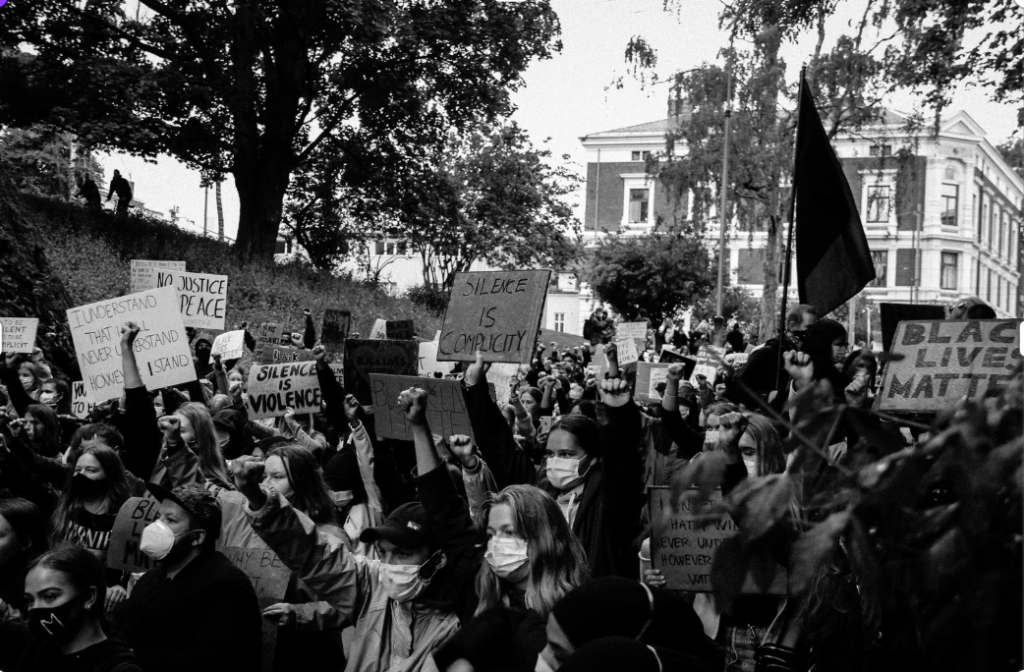
The western world has witnessed a growing nationalistic fervor in the past one decade, from Donald Trump’s ‘America First’ clarion call to strong anti-immigrant sentiments in continental Europe. Attendant to this political shift is a resurgence of social conservatism whereby social norms are increasingly being tied to religion-influenced notions of morality. One prime example where this pattern is best observed is in Poland. Under the leadership of the right-wing Law and Justice Party, the nation has embarked on a legislative campaign to either ban, or significantly restrict, abortion (Donadio 1; HRW 1). This move has been met with fierce resistance from women’s rights activists in the country who have mobilized thousands in protest marches that have garnered global media attention. An examination of the impact of Poland’s abortion laws on women, gender, and feminism is presented herein.
Evolution of the Abortion Legal Landscape: An Overview
Polish abortion laws have exhibited an interesting swing between liberalism and conservatism since the 1930s. For instance, the country became the second country in the world, after the Soviet Union, to legalize abortion in 1932 under the rationale of medical necessity or pregnancies arising from criminal acts such as rape and incest (Hussein, Cottingham and Nowicka 12). These bases for the justification of abortion notably apply across many other jurisdictions internationally beside Poland. However, the two nations would soon proceed in different directions. The Soviet Union, under Stalin’s leadership, would recriminalize abortion whereas Poland would further avail abortion for reasons of economic hardship in 1956 (Hussein, Cottingham and Nowicka 12). Consequently, Polish women who conceived under difficult conditions of life could now seek abortion services in both private and public healthcare facilities.
However, this shift towards liberalized abortion laws would come to an end in the final decade of the 20th century. This was a period marked by the shift to democratization following the fall of communism in the late 1980s. Ironically, this period of growing democratic reforms significantly influenced the conservative direction which Polish abortion laws would take for the foreseeable future. According to Hussein, Cottingham, and Nowicka (2018), the expanded democratic space granted the Catholic Church in the country new powers to influence public policy, thereby resulting in the crafting of abortion laws that were highly restrictive in nature. Accordingly, women in Poland had to jump through new hoops to obtain a legal abortion.
In the middle of the past decade, a new political development in Poland would further drive the country’s abortion laws in a conservative direction. The socially conservative Law and Justice Party was overwhelmingly elected with a resounding majority in parliament; a development that gave it significant latitude to influence public policy unopposed (Cullen and Korolczuk 7). It is worth noting that the party’s rise to political prominence was primarily fueled by nationalistic-inspired fears over immigration and other perceived external threats. To further consolidate its grip on power, the Law and Justice Party sought a close relationship with the Polish Catholic Church which is a bastion of social conservatism in the country (HRW 1). As expected, the church’s position on abortion would soon influence the government’s stance on the issue. In 2016, the government’s attempt to ban abortion elicited the famous ‘black protest’ which compelled it to reconsider its position; a more recent move to impose more restrictions via a Constitutional Tribunal have also provoked widespread protests that are currently ongoing despite the prevailing threat of a global pandemic (Donadio 1). Going forward, abortion laws in particular and women’s sexual health in general are going to be hot-button issues in the country’s political space.
Nationalism and Gendered Social Control
One cannot effectively analyze the relationship between politics and abortion in any jurisdiction without exploring the impact of nationalism on the social landscape within that jurisdiction. Nationalism can be understood as an inward-looking political ideology which prioritizes the needs and interests of the nation above all else. It calls for maximizing the nation state’s power relative to regional peers through socioeconomic and political means. Against this backdrop, individuals within the nation state are expected to make necessary sacrifices for the prosperity of the nation. Citizenship becomes a highly contested concept especially with respect to who enjoys the rights that it confers. Consequently, in a polity where nationalism is the prevailing mode of political engagement, immigrants are likely to bear the brunt of a citizenry who may feel shortchanged economically or in some other way.
In Poland, as is the case in several other jurisdictions in Europe, nationalistic sentiments have permeated almost every aspect of life. It is worth noting that nationalistic identity can be rooted in different factors, such as history or religion. Poland’s brand of nationalism is rooted in religious identity; specifically it is informed by the nation’s strong Catholic identity (Kozlowska, Beland and Lecours 824). Accordingly, the teachings and values of the Catholic Church in the country fundamentally determine what falls within or outside the scope of nationalistic patriotism. It becomes increasingly difficult to effectively separate the church and the state. The former’s positions on issues of public interest substantially inform legislative action by the latter.
Given the Catholic Church’s renewed influence in Polish politics, it can indirectly delineate the limitations of citizenship. Essentially, by outlining the scope of acceptable and unacceptable conduct, it can influence the inclusion or exclusion of voices within the public policy space. One way it achieves this effect is through gendered social control. This is where the church emphasizes a hierarchical and binary gender relationship between men and women; a relationship that is characterized with clearly defined traditional gender roles. In this context, men are the primary economic agents while women support the men and maintain a nurturing relationship with their children on the home front. Those who conform to this gendered dynamic are perceived as being patriotic and nationalistic, while those who challenge it are viewed as a serious threat to the social order and are thus subjected to repressive action by the state machinery.
Impact on Women and Feminism
Restrictive abortion laws undermine the agency of women not only as economic and political actors, but also as human beings. These laws place the responsibility for the sexual and reproductive health of women in the hands of people who seek to control it for their own interests. They effectively delineate women’s “passive citizenship within state” (Rodriguez-Ruiz 699). Implicitly, they reduce women to a political ‘pawn’ that can be traded between the political and religious elite; basically, the latter can use women’s sexual and reproductive rights as a leverage to negotiate their power position with the former. Against this backdrop, it becomes exceptionally difficult for women to seek and access quality reproductive healthcare.
Inadequate access to proper sexual and reproductive healthcare is a major challenge in Poland. For instance, despite the government formally reporting a little over 1,000 legal abortions for 2016, it estimated that between 50,000 and 200,000 illegal abortions were conducted in that year alone; it is also worth noting that only 47.7% of married/in-union Polish women in the 15-49yrs age bracket used modern contraceptives in 2015, the lowest figure in Europe (Hussein, Cottingham and Nowicka 11). These statistics underscore the obstacles that Polish women have to go through in the quest to access a basic human right. Illegal abortions can be dangerous owing to a lack of effective regulation of those who offer it. This challenge is further exacerbated by the fear of seeking abortion aftercare among women whose procedure may have been botched. Accordingly, it is evident that restrictive abortion laws are a direct threat to the health and well-being of women in Poland.
One also has to acknowledge the stigmatizing effect on women that arises from restrictive abortion laws. Supporters of these laws often employ highly evocative rhetorical strategies in articulating their position on abortion. For instance, ‘foetus’ is often replaced with ‘conceived child’ in legal documents and ‘unborn child’ in public conversations (Szelewa 741). The objective of this deliberate framing is to castigate women who seek abortion services as ‘murderers’ of unborn children; a tag that can be highly stigmatizing in such a socially conservative context like Poland. Interestingly, this pattern has also been observed in Ireland, another jurisdiction in which the Catholic Church has had a strong influence on abortion legislation for decades. As Cullen and Korolczuk (2019) aptly note:
Despite shifts in both the global and transnational context of morality politics in both countries, what has remained consistent in cultural terms is the stigmatization of abortion as immoral, ethically reprehensible and dangerous both to women’s well-being and to the survival of the nation. These constructions of abortion have forced women to seek reproductive healthcare abroad or in the underground.(p. 10)
This stigmatization of abortion and the women who seek it for various reasons can have a serious mental health impact on victims; one that the anti-abortion camp conveniently ignores.
Nevertheless, there is a silver lining to restrictive abortion laws. As the Polish experience has shown, they grant Feminists a new impetus in their quest to mobilize society against gendered injustice. The ‘black protests’ of 2016 were especially notable in their ability to bring together men and women from different parts of Poland, a significant number of whom had not previously engaged in such activism (HRW 1). It underscored a growing disenchantment with inhibitory conservative social norms in the country. By any measure, this is undoubtedly a feminist victory as it proves that there is significant latitude for Polish feminists to build broad based alliances with other factions within society in a bid to advance reproductive justice and other elements of gendered justice.
Despite the seeming feminist victory in Poland, one has to be cautious with respect to asserting or predicting whether this victory can last. It is worth remembering that abortion activism takes place within a broader context of social issues of public interest. In Poland specifically, there is the challenge of growing nationalism and the governance issues that come with it. Accordingly, feminists may often have to voice support for other political and economic activists whose mandate may well lie beyond reproductive rights. Essentially, it is a quid pro quo arrangement in which these other activists may seek some concessions from feminists if they are to back the latter’s causes. This state of affairs necessitates expediency, as described by Cullen and Korolczuk (2019):
Feminist narratives on abortion can be understood as frames that invoke core principles, including self-determination and autonomy, yet may involve selective interpretations of other principles aimed at securing allies, maintaining public support and facilitating change. Fundamentally, for feminist claims, expediency often shapes choices around public framing, because enhancing the chance to influence policy requires public support and demobilization of strong counter-movements. (p.8)
Therefore, how much progress Polish feminists make in their quest for reproductive justice, in the face of restrictive abortion laws, will be determined by their ability to build sustainable alliances, which may call for compromises in the interest of expediency. The Polish political space thus warrants close watching as the Law and Justice Party and its allies may seek to scuttle the possibility for such broad liberal alliances.
Conclusion
Rising nationalism in the western world is increasingly becoming enmeshed with social conservatism. Against this backdrop, abortion has become a highly controversial matter in the public policy space. On one hand, anti-abortion forces are seeking to attach restrictive social norms around the issue to a nationalistic identity with the aim of building a power base among the conservative constituency. Conversely, pro-choice activists seek to expand access to, and legal protections for, sexual and reproductive healthcare for many women who are suffering in the shadows. This contest has played out prominently in Poland where the ruling Law and Justice Party has sought to systematically claw back abortion protections since ascending to power in 2015. The impact of these policies on women, gender, and feminism in Poland has been explored herein. Ultimately, it is clear that while restrictive abortion laws can occasion impediments with respect to women’s sexual and reproductive health, they also present excellent opportunities for renewed feminist activism.
Works Cited
Cullen, Pauline and Elzbieta Korolczuk. “Challenging abortion stigma: framing abortion in Ireland and Poland.” Sexual and Reproductive Health Matters vol. 27, no. 3, 2019, pp. 6-19.
Donadio, Irene. “Poland’s assault on women’s rights is just the beginning.” 29 October 2020. EU Observer, https://euobserver.com/opinion/149889. Accessed 25 November 2020.
HRW. “The Breath of the Government on My Back”: Attack on Women Rights in Poland. 6 February 2019. Human Rights Watch, https://www.hrw.org/report/2019/02/06/breath-government-my-back/attacks-womens-rights-poland. Accessed 25 November 2020.
Hussein, Julia, et al. “Abortion in Poland: politics, progression and regression.” Reproductive Health Matters vol. 26, no. 52, 2018, pp. 11-14.
Kozlowska, Iga, Daniel Beland and Andre Lecours. “Nationalism, religion, and abortion policy in four Catholic societies.” Nations and Nationalism vol. 22, no. 4, 2016, pp. 824-844.
Rodriguez-Ruiz, Blanca. “Gender in Constitutional Discourses on Abortion.” Social & Legal Studies vol. 25, no. 6, 2016, pp. 699-715.
Szelewa, Dorota. “Killing ‘Unborn Children’? The Catholic Church and Abortion Law in Poland Since 1989.” Social & Legal Studies vol. 25, no. 6, 2016, pp. 741-764.
 INC.SANITY
Leave a comment