
December 2020
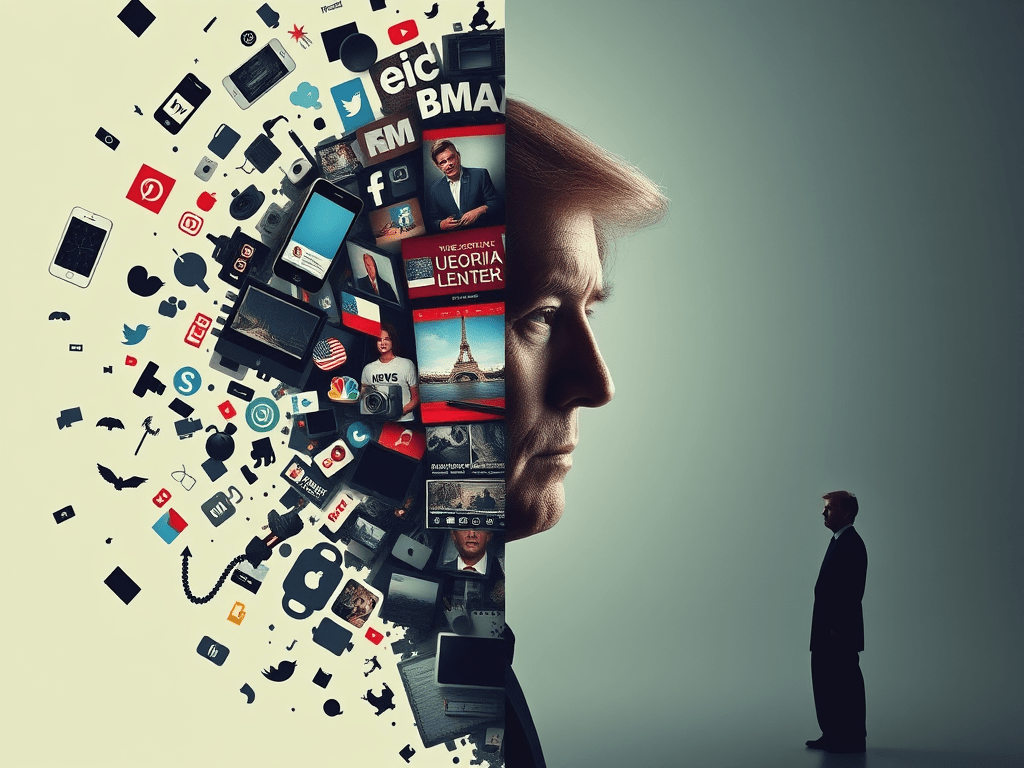
Ever since the Kennedy-Nixon debates were televised in 1960, presidential elections have been almost synonymous with the mass media narratives that arise and that tell the story of the election to the masses – and that shape the history of these elections. Every four years, the media take on an even greater role in elections. The 2016 election is no exception. This strange election between two deeply polarizing candidates was one of the most highly mediated in history, and the mediation of these particular candidates in the mass media was arguably more important than any policy-based characteristics. As a result of forces outside the politicians’ control, the way the mass media was leveraged led to a Trump victory. The agenda setting that occurred in social media influence and misinformation campaigns was a part of this victory. However, the media’s bigger role was in the cumulative impact of status conferral and how it repositioned the Overton window. This repositioning occurred alongside a coarsening of discourse that allowed many to feel empowered to admit to beliefs that had not previously been part of civil discourse. In this essay, we will explore the theory of cumulative effect in the media primarily through the lens of Elisabeth Noelle-Newman’s ideas about the spiral of silence in mass communication and public opinion, which highlight how agenda setting occurred in this election.
Spiral of Silence
Elisabeth Noelle-Newman’s best-known theory of public opinion is called “the spiral of silence.” This dramatic title belies the tendencies of the media to homogenize opinion and to communicate consensus because of the tendencies that individuals demonstrate. Specifically, she homed in on the desire of most people to avoid isolation in their opinions. According to her research in 1974, she hypothesized that people first imagined how the public thought about certain issues and then decide whether to reveal those views publicly based on how normative they thought their opinions were (Noelle-Neumann 45). She argued that the media set the agenda because many opinions are overrepresented in mass media and because all people wish to avoid isolation, ostracization, and the loss of social capital (although she mostly confines her theory to the idea of “isolation”). People whose opinions diverge from the mainstream or hegemony are already keenly aware of public opinion. If they perceive their opinion as becoming more popular, they will begin expressing it in public, but if they feel their opinion puts them in a minority, they will stay silent. Because of the media has ability to amplify opinions, the more vocal factions will enjoy representation in the media that makes their opinions seem popular or even mainstream. In contrast, those whose opinions are less mainstream will stay silent, and this opinion will be underestimated in public discourse. The spiral refers to how opinions gain traction and representation in media and issues are reshaped by the media as binary or, in some cases, decided.
Consequently, she predicted that current minority opinions could eventually become majority opinions, and this could be anticipated through opinion surveys. She also concluded that the factions more willing to publicly discuss their opinions would be successful at achieving their views in the future, and that this would be true in “… All spheres in which the attitude and behavior of the individual is governed the link between his own convictions and the results of his observation of the social environment” (Noelle-Neumann 50). Although she primarily used opinion surveys and divisive social issues as abortion, Noelle-Neumann hypothesized that her findings could be extrapolated to many other contexts. The uniqueness of her theory lay in her willingness to hypothesize a multidirectional relationship between audiences in the media, rather than the more passive, unidirectional relationships that some other media theories had proposed. Although her theory is not infallible, this silence “spiral” has direct relevance to the American election in 2016, as we will see later in the essay.
Agenda Setting
Another important theory that bears on our analysis of the 2016 election is agenda setting. Agenda setting refers to how the media’s apparatus and the power it entails draws people’s attention to certain issues, and, in an echo of the spiral of silence, portrays some issues as important (Vargo et al. 2029). As a verb, agenda setting refers to “…the transmission of issue salience from the media agenda to the public agenda” (McCombs, sec.857; number refers to the Kindle file location). The rise of celebrity for the sake of being a celebrity is a pertinent example of how this works in the United States: News reporters focus in detail on someone and audiences presume that this person is important because of the number of media messages they encounter about them.
When it is said that the media have engaged in agenda setting, we mean that the frequency of news media coverage and the salience the public attributes to the topic shift. With frequent mentions of a topic, the public begins to assume that the topic is more important. While this may seem like common sense, the rise of big data and social media have ossified the process of agenda setting. The idea of topics online being measured by search volume, hashtags, or user engagement reflects an ideology of the markets, and popularity – even if it can be manipulated – sets the agenda in this way.
Role of Social Media
In the 2016 election, these two theories came into sharp collision in the relatively new landscape of social media. Social media had played an increasingly important role in elections since 2008, when Obama supporters successfully leveraged the emerging platforms of Facebook to improve activism and turnout (Kreiss) via a “youthquake” (Wattenberg) to achieve “…the first social media election” (Enli 51). The platform of social media had evolved into an agenda-setting apparatus by 2016. The consolidation of social media platforms concentrated audiences (Enli 52), and the evolution of these platforms as big data apparatuses reduced opportunities for people to be exposed to viewpoints other than their own. Since social media’s monetization relies on advertisements designed to target hyper-specific market niches, these platforms benefit when people give “clicks” to specific and biased outlets as these “clicks” represent data points that can later be monetized into advertising revenue.
The Cambridge Analytica scandal highlighted this in stark detail. Although this scandal was not uncovered until 2018, Facebook’s leak of up to 50 million people’s personal information represented some of the most nefarious aspects of social media and big data. “The company reportedly generated personality profiles of millions of individual voters which were then used to send narrowly targeted political advertisements” (González 9) to users based on long-term and personal interactions on Facebook. Cambridge Analytica claimed that it simply used social media data in a useful way to meet the needs of its clients (Rathi). Some believe that Cambridge Analytica’s ads helped to throw the election towards Donald Trump because of the strategic deployment of these political ads towards such targeted audiences. However, most scholars agree that Cambridge Analytica exaggerated the effects of its work in the 2016 election (Rathi; González). Although Cambridge Analytica was a highly unethical company, theories that assume it somehow utilized psychology to change voters’ minds ignore the role of autonomy and choice for voters.
Regardless, the scandal highlights the echo chambers that have formed in contemporary mass media, as well as the sophisticated attempts of media platforms to gain audiences. Cambridge Analytica shows how the mass media can move in multiple directions to shape behavior and attitudes, often without the public being aware of what information they are providing or how it is being used (González 11–12). It demonstrates the cumulative effect of data points and social media interactions, and the ways in which even those media platforms that purport to give users a voice are nonetheless manipulating them, and by extent, are setting the agenda. Combined with Trump’s infamously unpredictable use of the Twitter platform, Trump was effectively able to set the agenda and shift the focus away from his political and personal shortcomings and onto his opponent’s own scandals.
Although traditional agenda setting relies on journalists’ ability to transform public opinion, the shift in discourse on social media towards the public and the market logic applied to understanding what is popular in social media gave the insurgent movement more popularity. However, because of the silence spiral, many underestimated the coalition of Trump supporters. In addition, social media increasingly set the agenda for conservative-oriented television, creating a sort of “trickle up” effect in which increased discourse in the social media sphere set the agenda of already biased news institutions.
Another aspect of the relationship between media and the 2016 election was the unique unpopularity of both candidates, and especially Hillary Clinton (Wattenberg). By exploring how each major candidate used social media, and how the social media discourse constructed caricatures out of each candidate, Trump’s victory makes sense from a mass media and communications standpoint more than from a political one. Trump’s relationship with social media and its relationship with him provides insight into the cumulative effects of the mass media’s power over the election.
Furthermore, Trump reacted differently to the social media discourse, which helped to amplify the conversations surrounding his candidacy. Because he was notorious for being a “loose cannon” on Twitter and routinely said things on that platform as well as on television that were offensive, the “silent spiral” came into play. Those who had previously felt that their views on, for example, women, minorities, immigrants, or others might not have been mainstream were newly emboldened by Trump’s vulgar, offensive statements.
Meanwhile, the anonymity of the Internet and the many subcultures it sparks had already reduced the impact of social isolation as envisioned by Noelle-Neumann. For years, people been able to seek out like-minded community members in anonymous and semi-anonymous online spaces for almost any interest, and particularly for unpopular viewpoints and ideas (Coleman; Tolentino). In online spaces, the anonymity reduced the potential consequences for holding minority beliefs, such as white supremacy, and perhaps people began to perceive their views as more popular than they were. Online subcultures such as “incels” (“involuntary celibates,” misogynist men who felt that women owed them sex) rejoiced that Trump seemed to bring their views into the mainstream (Nagle); in fact, a mass shooter who had belonged to one of these groups actually opposed Trump – because he felt that Trump had stolen some of his slogans (Bostock). By validating some of the ideas (and, apparently, some of the slogans) of these online groups, Trump brought these ideas into the mainstream, which gave them greater popularity; these groups’ embrace of Trump also set the agenda both in the mainstream as well as within groups adjacent to or involved with the Republican Party.
Trump’s Strategy and Impact
Trump’s ability to co-op social media discourse eventually set the agenda in the Republican party. Those who supported Trump’s policies of extreme American isolationism, climate change denial, and tacit or overt racism were emboldened to bring those attitudes into public discourses; those who might have been American Republicans but who disliked Trump’s style, demeanor, and / or lack of experience perceived their views as minority and began to embrace his candidacy. This aspect of Trump’s status in the media in 2016 was also exacerbated by the American political system and the entrenched two-party system.
Clinton also failed to capture the Obama coalition, which had been driven by social media. Meanwhile, Trump leveraged his popularity on Twitter to both attack Clinton as well as to encourage his followers to pay attention to the people, candidates, news organizations, and to amplify his voice. This had the effect of not only setting the agenda, but also providing free advertisements to his campaign and his proposals. Because of the increased quantity of messages about Trump, particularly on the Twitter platform, the salience of his campaign increased. More moderate Republicans began to support Trump’s platform, to amplify his message, and to focus the political debate in the general election around Trump’s agenda.
This was especially evident on Twitter. Just as social media used Twitter to construct a mediated caricature (or, more properly, two caricatures: One pro-Trump and one anti-Trump, each of which was leveraged by a different mass media audience), Trump also used the affordances of the platform to set the agenda in his favor by leveraging opportunities for message penetration. Trump’s campaign used social media differently than establishment politicians:
…the 2016 Trump campaign started from scratch in the realm of political communication; rather than copying the social media strategies of the professionalized campaigns run by the Democratic party, Donald Trump chose a strategy better described as ‘amateurism’. His image as a candidate was largely formed by his widely circulated tweets, which were often quoted and debated in the mainstream media… (Buccoliero et al. 110).
Despite the “amateur” nature of Trump’s use of social media, people responded to it. Regardless of his original strategy, if there was one, the masses responded positively: “Some of the issues Trump stressed in his tweets (i.e., media bias and Clinton’s alleged dishonesty) drew significantly more favorites and retweets, suggesting public agenda setting possibilities through Twitter” (Lee and Xu 201). Clinton’s negative tweets were also among her most popular during the campaign, but Trump’s achieved a greater quantitative impact, suggesting that Trump was more successful at setting the agenda solely in terms of the content’s “viral” nature. Yet as noted in Buccolioero et al., the mass / mainstream media devoted a great deal of time and attention to reporting on his tweets, or effectively retweeting them on television or radio news broadcasts to an even wider audience. This increased attention through the mass media granted media salience to the issues Trump brought up, which created a problem for Clinton’s campaign that she never fully recovered from.
Meanwhile Clinton’s unpopularity was amplified by Trump’s ability to set the agenda. Instead of discussing policy, both candidates and the media surrounding them focused on scandals or attacking each other. Similar to pinball machines in which the ball bounces rapidly back and forth between two high-tension bumpers, the negativity seemed to exist in a feedback loop. Clinton’s use of social media was “…a continuation of the professionalized social media campaigns established in previous presidential campaigns by the Democratic Party” (Buccoliero et al. 110). Although she engaged in numerous negative tweets of Trump and other Republicans, she maintained the decorum that had once been expected of political candidates and did not focus on the narrow, repeated topics of bias and Clinton’s email scandal, which dominated Trump’s social media use. Clinton’s more diverse social media content led to diluted salience, and without an organized attack or concentration of allies in one distinct social media platform, she was unable to control the mass media message the way Trump’s followers were able to. Clinton’s messaging about feminism, and particularly her messaging highlighting her impressive accomplishments by framing her as a trailblazing woman, played poorly against the silence spiral and how it had brought misogyny into the mainstream. The public perception that feminists were “Tumblrinas” who aggressively insisted on political correctness and “cancel culture” gave the conservative media and Twittersphere more to mock Clinton for (Nagle).
Conclusion
It may be obvious from the foregoing few paragraphs that the dynamic between Clinton and Trump in the election dealt with media, not any debates regarding politics or policy. Enli (2017) observed the irony that while Trump spent a great deal of time attacking mainstream or “biased” news outlets such as The New York Times, Trump’s Twitter following alone was nearly 15 times greater than the number of people who subscribed to the New York Times and subsequently, “…Trump’s Twitter campaign might critique the mainstream media, but it is also in itself a mass media channel” (Enli 53). Therefore, the biggest takeaway from the 2016 election is not necessarily that Trump won by an “authentic” and unvarnished self-presentation on social media, but rather that the evolution of various social media platforms allowed for the spiral of silence to shift and for ideas that were once regarded as fringe to set the agenda for the mainstream. The result was the growth of what was effectively a new mass media apparatus in the form of Trump’s social media profile and the power it had to set the agenda elsewhere.
Works Cited
Bostock, B. “The Mass Shooter Who Killed 9 in Germany Published a Racist Manifesto Where He Identified as an Incel and Accused Trump of Stealing His Populist Slogans.” Insider, 2020, https://www.insider.com/hanau-terrorist-manifesto-shows-non-white-hatred-incel-trump-theft-2020-2.
Buccoliero, Luca, et al. “Twitter and Politics: Evidence from the US Presidential Elections 2016.” Journal of Marketing Communications, vol. 26, no. 1, Routledge, Jan. 2020, pp. 88–114, doi:10.1080/13527266.2018.1504228.
Coleman, Gabriella. Hacker, Hoaxer, Whistleblower, Spy: The Many Faces of Anonymous. Verso Books, 2014.
Enli, Gunn. “Twitter as Arena for the Authentic Outsider: Exploring the Social Media Campaigns of Trump and Clinton in the 2016 US Presidential Election.” European Journal of Communication, vol. 32, no. 1, 2017, pp. 50–61, doi:10.1177/0267323116682802.
González, Roberto J. “Hacking the Citizenry?: Personality Profiling, ‘Big Data’ and the Election of Donald Trump.” Anthropology Today, vol. 33, no. 3, 2017, pp. 9–12, doi:10.1111/1467-8322.12348.
Kreiss, Daniel. “Acting in the Public Sphere: The 2008 Obama Campaign’s Strategic Use of New Media to Shape Narratives of the Presidential Race.” Research in Social Movements, Conflicts and Change, vol. 33, no. May 2012, 2012, pp. 195–223, doi:10.1108/S0163-786X(2012)0000033011.
Lee, Jayeon, and Weiai Xu. “The More Attacks, the More Retweets: Trump’s and Clinton’s Agenda Setting on Twitter.” Public Relations Review, vol. 44, no. 2, Elsevier, 2018, pp. 201–13, doi:10.1016/j.pubrev.2017.10.002.
McCombs, M. Setting the Agenda. Polity Press, 2014.
Nagle, A. Kill All Normies: Online Culture Wars from 4chan and Tumblr to Trump and the Alt-Right. John Hunt Publishing, 2017.
Noelle-Neumann, Elisabeth. “The Spiral of Silence: A Theory of Public Opinion.” Political Communication in the Online World, vol. 24, no. 2, 1974, pp. 43–51, doi:10.1111/j.1460-2466.1974.tb00367.x.
Rathi, Rahul. “Effect of Cambridge Analytica’s Facebook Ads on the 2016 US Presidential Election.” Towards Data Science, Jan. 2019.
Tolentino, Jia. “The Rage of the Incels.” The New Yorker, May 2018.
Vargo, Chris J., et al. “The Agenda-Setting Power of Fake News: A Big Data Analysis of the Online Media Landscape from 2014 to 2016.” New Media and Society, vol. 20, no. 5, 2018, pp. 2028–49, doi:10.1177/1461444817712086.
Wattenberg, Martin P. “Polls and Elections : From the Obama Youthquake of ’08 to the Trumpquake of ’16: How Young People’s Dislike of Hillary Clinton Cost Her the Election.” Presidential Studies Quarterly, vol. 49, no. 1, Mar. 2019, pp. 168–84, doi:10.1111/psq.12452.
 INC.SANITY
Leave a comment