
March 2021
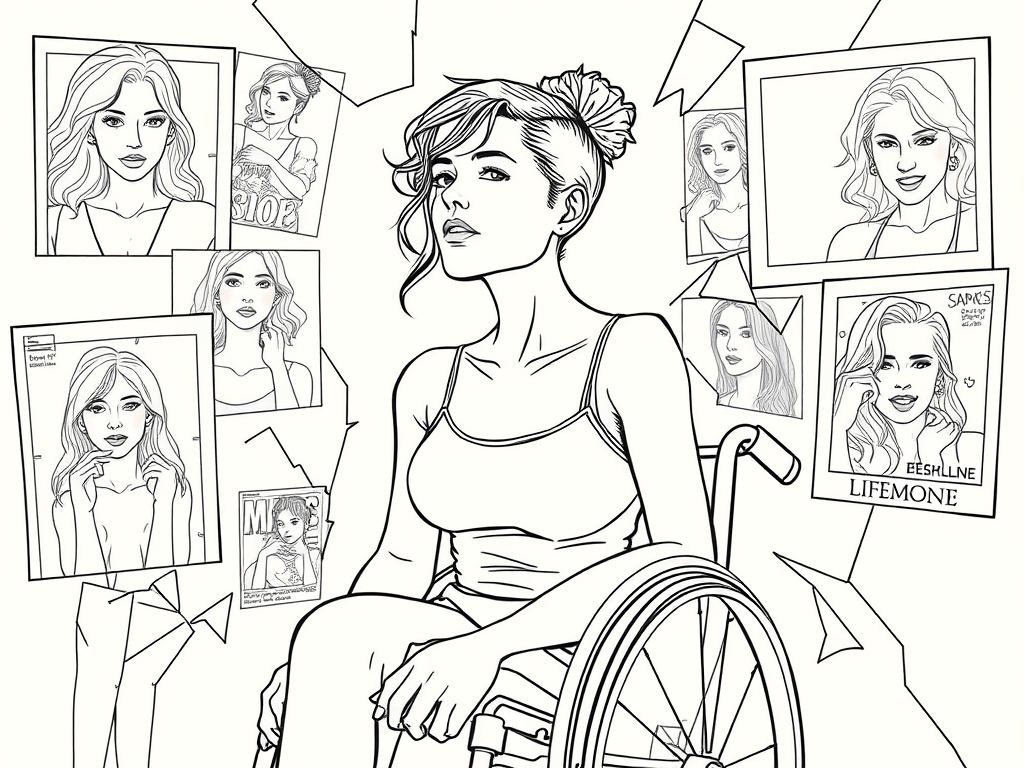
The term ableism is commonly used when describing the negative treatment of people with disabilities. Ableism is broadly defined as practices or beliefs that result in a particular perception of one’s body, self, or relationship with others as exhibited by their values or abilities. Over time, the mainstream media has ignored individuals with disabilities portraying them as asexual or dependent. This misrepresentation by the media leads to misconceptions by society on living with disabilities. Notably, the media portrays a one-dimensional view of men and women based on specific individuals’ traditional attitudes and gender roles. This paper seeks to evaluate handicap representation in the modern media.
The acceptance of traditional ideologies on gender roles may correlate with the negative sexual attitudes expressed towards women with disabilities based on the perception that these women violate gender roles. According to Kang, Lessard, and Heston (78), the average American aged 18-34 years spend 4 hours per day on average on a television-connected device. This overwhelming exposure to media makes it important to inquire about the possible effects of media advertisements on the audience. What is the effect of media on gendered inequality, racialized differences, and gendered ableism?
According to Kang, Lessard, and Heston (78), media forms the primary socialization institution that creates and reflects culture. An example that explains media influence on culture is through Disney movies. These movies were set featuring a dominant young man- often considered the prince, who gets romantically interested in a young woman. The two are always assumed heterosexual; the princess initially resists advances from the prince but later falls in love and marries him. These Disney movies influence children’s perceptions of gender and sexuality. They also teach the values of emphasized feminism and hegemonic masculinity.
The media is also seen to reproduce gendered and racialized normative standards when illustrating beauty ideals for both men and women. In Killing Us Softly, a video by Jean Kilbourne (Kang, Lessard, and Heston 78), women representation in films, advertising, and magazines majorly rely on women’s objectification. This objectification involves omitting parts of the women’s bodies with camera frames or using digital camera manipulation to obtain a desired feminized body from normally unattainable characteristics.
Kilbourne, through his film, depicts how advertising often represents white women with petite and European facial features while women of color are eroticized in nature scenes wearing animal-print attires as a representation of the pre-civilization past. Media is used to cast women of color as savage and animalistic. This practice was historically used in political cartoons to legitimize the subjugation of people of color and the disabled as fewer humans. Further, the media is used to depict reality from a masculine point of view. A male gaze is a form of framing brought about by the media that depicts women as sex objects of men’s desire.
The media is also instrumental in bringing up power differences between social groups by use of symbolic annihilation. This refers to how groups in the society that lack power are rendered absent, trivialized or condemned through media representations, reinforcing ideologies and privileges from dominant groups (Friedman 102). For instance, transgender, gay, lesbian, and disabled characters are often few in media advertisements or misrepresented and stereotyped. Similarly, trans women characters in mass media are portrayed by the cisgender heterosexual males to ridicule, plot twist, or comic effect. The media represent them as “actual men” who camouflage or deceive men to have sexual intercourse, considered evildoers and pretenders.
Handicap representation in modern media
People with disabilities have not received proportional representation by the media. Often, show producers omit the disabled from casting or in writing shows, probably because of the storylines based on stereotypes or through the use of non-disabled people to play handicapped roles. Mass media form an integral part of the lives of many adults, children, and adolescents. Whereas most people prefer to use mass media as a form of entertainment, media is often used as an exploration developmental tool in education, sexuality, identity, and curiosity. Whether done on purpose or not, these advertising images on mass media indoctrinate developing children with messages of stigmatization or marginalization of people deemed unattractive to be included in mass media imagery. How people with disabilities are represented or misrepresented directly impacts the audiences’ attitudes and prejudice.
According to Parsons, Reichl, and Pedersen (208), prejudice is primarily brought about by invisibility, often disseminated by media through under-representation. People with disabilities are often ignored by mainstream media advertisements, which further isolates and stigmatizes them. Research studies on television diversity carried out in the United States and Canada indicate that 1 percent of the regular characters in American television shows had disabilities (Parsons, Reichl, and Pedersen 208). This under-representation of people with disabilities by media outlets creates invisibility and marginalization. Disability, if combined with the devaluation of women in society, creates an extremely stigmatized experience. Women are also underrepresented in media films. In most instances where women are represented, they serve to reinforce the idea of female bodies serving as social standards.
Women with disabilities, therefore, are marginalized based on their disabilities and gender. This cross-section of discrimination based on gender and disability renders disabled omen powerless in society. For instance, a physically disabled mother or wife is perceived to be violating the gender norms by asking for assistance in performing house chores. Research indicates that women and men are expected to submit to the ancient gender ideologies construed by society. These prejudices are more pronounced among people with traditional gender role attitudes. Research shows that conventional gender ideologies directly correlate to homophobic attitudes and are relatively negative in evaluating individuals who violate traditional expectations (Parsons, Reichl, and Pedersen 208). Instead of normalizing disability, media representation of women with disabilities may fuel the perceived role violations in people with traditional gender beliefs.
Research conducted to determine the effect of gender role beliefs on people’s attitudes towards disabled men and women featured media advertisements of non-disabled people vis-a-vis those with physical disabilities. The general hypothesis for this research was that individuals holding traditional gender beliefs would exhibit more negative attitudes than egalitarians. The study’s general results indicated that people who had conventional gender beliefs portrayed negative attitudes, in terms of sexuality, towards physically disabled people. This research supports the hypothesis that physically disabled women are likely to face dual oppression in expressing their sexuality and an ableist society (Lind 62). Egalitarian participants, however, had more positive attitudes towards women than men with disabilities.
Results obtained from egalitarian participants indicated favorable attitudes towards sexuality among people with disabilities. This was expected from the hypothesis; however, this group was negatively affected by media advertisements. Able-bodied advertisements were primarily associated with positive attitudes in men but faced criticism when disabled women displayed these sexual behaviors. This indicates that the egalitarians’ beliefs in fairness and gender equality do not apply, especially when submitting to individuals with gender disabilities. When conducting this research, no hypothesis was made on the attitudes expected between male and female participants. However, measures of the attitudes indicated a positive score towards the sexuality of people with disabilities among female participants than in men. This finding is inconsistent with previous research studies that considered men to outscore females in sexuality and sex measures.
Overall, the research findings indicate men are more reserved towards the sexuality of disabled women, and this negative attitude becomes elevated when confronted with videos or images of such individuals. Other research studies indicate the possibility of eliciting fear when men are confronted with a physically disabled person’s images. Most male persons fear developing similar disabilities. Because of the continued marginalization of disabled individuals by the mass media and stigmatization by society, the common assumption is that increased media coverage can help reduce this stigma. This assumption, however, is not true based on the new research findings that indicate less encouraging results, as evidently seen from men’s reactions to advertisements featuring disabled females.
According to the Disability Rights Education & Defend Fund (DREDF), images and stories shared by mass media influence peoples thinking and social norms. People with disabilities continually endure defamation, misrepresentation, and lack of representation in media news resulting in stereotypes and fear about disability. Additionally, the culture of isolating, demeaning, or institutionalizing people with disabilities has led to negative, inaccurate beliefs about disability.
Haller and Zhang, in the article Stigma or Empowerment, indicate that after the enactment of the 1990 Americans with Disabilities Act (ADA), a survey poll indicated increased confidence among the sample population. More Americans felt less awkward being around disabled people after viewing fictional television shows about disabled people. Further, televisions and other forms of media are perceived as instruments that should be used to drive attitude change towards disabled individuals. Tom Shakespeare, a disability scholar, further reiterates that these inaccurate stereotypes propagated by media are dangerous because they encourage negative attitudes and ignorance (Haller and Zhang).
Mainstream media that portrays disabled individuals as helpless, pitiful, and bitter propagates societal stigmatization and ableism. This negative perception informs non-disabled people’s attitude based on the perceived realities towards disability. Despite holding these negative views against the disabled, the non-disabled individuals often associate positive social traits to the disabled, therefore creating unfair expectations. Little or no counter-discourses to address this ableism are done, especially through the mass media, because of the audiences’ conflicting feedback (Wood 33). A mixture of positive and negative attitudes may appear either implicitly or explicitly, as explained by the aversive racism theory. The aversive theory dictates that prejudice is expected in interactions between disabled and nondisabled because of social norms’ expectations. These social norms also require individuals to help disabled people. Media discourses on gendered ableism on disabled sexuality, therefore, may be deemed inappropriate.
In conclusion, ableism broadly defines the practices or beliefs that result in a particular perception of one’s body, self, or relationship with others. People with disabilities often fall victim to sexual ableism partly because of the mainstream media, which ignores individuals with disabilities portraying them as asexual or dependent. Average Americans spend up to 4 hours per day on a television-connected device. This overwhelming exposure to media makes it important to inquire about the possible effects of media advertisements on the audience. The advertised images on mass media indoctrinate developing children with messages of stigmatization or marginalization of people deemed unattractive.
Images and stories shared by media influence peoples thinking and social norms. People with disabilities continually endure defamation, misrepresentation, and lack of representation in media news resulting in stereotypes and fear about disability. The inaccurate stereotypes propagated by media are dangerous because they encourage negative attitudes and ignorance. Egalitarian participants indicated favorable attitudes towards sexuality among people with disabilities. Men are more reserved towards the sexuality of disabled women, and this negative attitude becomes elevated when confronted with videos or images of such individuals. Media discourses on gendered ableism on disabled sexuality are deemed inappropriate because of social norms, as explained by the aversive racism theory.
Works Cited
Friedman, Carli. “Research Article Aversive Ableism: Modern Prejudice towards Disabled People.” Review of Disability Studies: An International Journal, vol. 14, no. 4, https://core.ac.uk/download/pdf/211328196.pdf. Accessed 16 April 2021.
Haller, Beth and Lingling Zhang. Stigma or Empowerment? What Do Disabled People Say About Their Representation in News and Entertainment Media? Towson University.
Kang, Miliann, Donovan Lessard, and Laura Heston. Introduction to Women, Gender, Sexuality Studies. University of Massachusetts Amherst Libraries Amherst, Massachusetts. 2017.
Lind, Rebecca Ann. Race/Gender/Class/Media Considering Diversity across Audiences, Content, and Producers. Routledge. 2019.
Parsons, L. Alexander, Reichl, J. Arleigh, and Cory, L. Pedersen. “Gendered Ableism: Media Representations and Gender Role Beliefs’ Effect on Perceptions of Disability and Sexuality.” Sex Disability, vol.35, 2017, pp. 207–225 DOI 10.1007/s11195-016-9464-6. Accessed 16 April 2016.
Wood, T. Julia. Gendered Media: The Influence of Media on Views of Gender. Chapter 9, pp. 231-244.
 INC.SANITY
Leave a comment